
Seeking foreign loan had forced Pakistan to 'bow' its head and make compromises at the 'cost of self-respect', Prime Minister Shehbaz Sharif has said in a candid admission about the humiliation involved in approaching 'friendly countries' for financial aid.

India face Vietnam in their opening match of the AFC Women's Asian Cup, with concerns over India's lack of international game time.

India is aiming to win multiple medals in disciplines like aquatics and cycling at the 2036 Olympic Games as both these events offer over a 100 medals.

This is the first Budget in my memory of Budgets over the last half a century which has embraced upfront, enthusiastically and emphatically, technology, modernity and fiscal sobriety, notes Shreekant Sambrani.

Restoring weighted tax deductions and adopting a petty patents regime can foster firm-level innovative activity critical for competitiveness, points out Nagesh Kumar.

'The problem is not just slower growth, but also the quality of growth.'

The fiscal tilt towards capex benefits companies in investment-related sectors like capital goods, defence equipment, engineering & construction and metal & mining. The planned cut in revenue expenditure will weigh on companies in consumption sectors like FMCG, consumer durables and retail.

The Union Budget 2025-26 had allocated Rs 2,33,210.68 crore (BE) to the ministry helmed by Union Home Minister Amit Shah.

'There is a challenge in repositioning yourself, maybe reinventing yourself.'
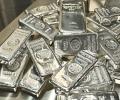
New investors should enter gradually and with a long horizon. 'Staggered investment through systematic purchase plans is advisable rather than lump-sum buying.'

Domestic gold exchange-traded funds (ETFs) saw their holdings jump 65 per cent to 95 tonnes in 2025, elevating Indian ETFs to sixth place globally, going by holdings of the yellow metal. At the end of 2024, they ranked eighth with 57.5 tonnes of holding, according to an analysis of data from the World Gold Council (WGC).

In 2025-26, the government allocated Rs 6,81,210 crore for defence budget.
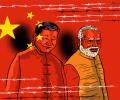
The bilateral trade between India and China has been growing at a healthy rate, but the trade gap remains sharply tilted in Beijing's favour. India has time and again flagged its concern over the ballooning trade deficit and the non-trade barriers faced by Indian goods in the Chinese market.

Foreign tourist arrivals in India dropped to 6.18 million during the April-September 2025 period against 7.06 million during the same period last year, which was a drop of 12.4 per cent.

'The trade deficit in some sectors is huge and that is an area of opportunity to localise.'

In a world fractured by uncertainty, India stands out for its policy consistency, paired with sustained ambition, points out Pritam Banerjee.

'We believe the truth is in the middle, and that India is at an important crossroads.'
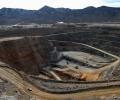
Following the disruption in the supply of rare earth or permanent magnets after China's notification on April 4, the mines ministry is planning to introduce a Rs 1,500 crore incentive scheme to recycle critical minerals, according to a top official.
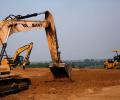
The Indian government should urgently consider imposing safeguard or anti-dumping duties on imports of two construction equipment segments - crawler excavators and tower cranes - as Chinese companies are rapidly expanding their presence in these markets in India through 'predatory' pricing supported by lower raw material costs, substantial export subsidies, and extended credit schemes, said Sorab Agarwal, executive director at Action Construction Equipment (ACE).

India has managed high government debt-to-GDP, a slowing domestic revenue engine, lower household savings and a more hostile geopolitical environment separately in the past. But together, they threaten to undo the growth narrative on which today's optimism rests, warns Debashis Basu.

A senior Pakistani minister has admitted that the country failed to capitalize on the China-Pakistan Economic Corridor (CPEC), citing attempts by the previous government to undermine Chinese investments, leading to investor flight.
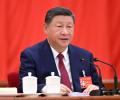
If Xi Jinping is dethroned in the future, the instrument for that may well be embedded within the PLA, notes former foreign secretary Shyam Saran.

India's gems & jewellery exports witnessed 30.6 per cent year-on-year (Y-o-Y) contraction in October to $2.17 million, amid the imposition of a steep 50 per cent tariff by the United States (US) on several Indian products.

This exercise allows investors to realign their portfolios with changing market conditions and evolving personal objectives.

India's new climate pledge to the UN could be weakened by its growing use of coal, even as the country plans a 2035 roadmap to cut emissions and boost clean energy.

Years of repression and disappearances have taught Venezuelans, the hard way, not to voice either their anger or their joy, observes Radha Roy Biswas who spent her formative years in Venezuela.

Smartphone exports for the first six months (April to September) of 2025-26 (FY26) surged to $13.4 billion, based on industry estimates. Driven by the production-linked incentive (PLI) scheme, this marks a 59 per cent jump over the $8.5 billion exported during the same period of the previous financial year (2024-25/FY25).
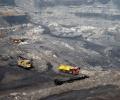
The government plans to establish a fully indigenous manufacturing ecosystem with an annual production capacity of up to 6,000 tonnes. The scheme is expected to run for seven years, according to official documents.

'Only four or five original companies remain; the rest have been replaced every decade as sectors evolve or leadership shifts.' 'Companies that fail to adapt -- like many textile mills from the 1970s and shipping firms from the 1980s -- disappear.' 'Benchmark indices reward those who reinvent themselves in line with economic demands.'

There's no change in Apple Inc's India strategy, said a top government source. 'It can only be enhanced'.

'They are a poor fit for anyone with near-term goals, low volatility tolerance, or a need for steady income or liquidity.' 'First-time investors should typically avoid them.'

Prime Minister Narendra Modi on Saturday proposed a G20 initiative aimed at enhancing clean energy transitions by boosting recycling, easing supply chain pressures and advancing joint research on critical minerals, and suggested forging a partnership to make satellite data more accessible and interoperable.

'The real story of 2025 is that India officially stopped being a 'market of the future' and started acting as the world's primary economic engine.'
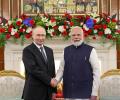
Luckily for us, a Russia that is desperate to stay relevant in an emerging multipolar world finds in India a reliable geostrategic partner. The Russian proximity to India also keeps China from exploiting its economic dominance vis a vis Russia, points out Colonel Anil A Athale (retd).
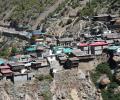
On August 5, 1953, Jawaharlal Nehru sent a strange note to the foreign secretary. It is worth mentioning because it was symptomatic of the lack of knowledge about Western Tibet in India and in South Block in particular, notes Claude Arpi.

The matter has now been escalated and the ministry has written to Customs, Bureau of Indian Standards (BIS) and the Directorate of Revenue Intelligence (DRI) to investigate it thoroughly.

The Maoists in Bastar went from one village to another with kits providing badly needed medical intervention. The medical help was one key reason why the tribals were attracted to the Maoists, points out M R Narayan Swamy.

'Don't look at Russia only as a place to earn quickly and then leave.' 'Try to build experience in serious companies, skills and certifications that will serve you anywhere in the world.'
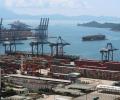
The government has set up an inter-ministerial group to monitor a possible surge in imports from countries like China, Vietnam and Thailand, fearing a surge in inbound shipments following the imposition of high reciprocal tariffs by the US on these countries, sources said. The product categories that may see an upsurge in diversion of imports from the US to India include consumer goods, electronics, chemicals and steel.
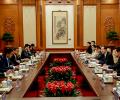
'We remain in touch with the Chinese side, in Beijing as well as in Delhi, to bring predictability in the supply chain.'
